Why Waiting to Replace Missing Teeth Actually Makes Everything Worse: The True Cost of Delay
That gap in your smile isn't just sitting there doing nothing. While you've been putting off dealing with that missing tooth, telling yourself you'll handle it "eventually" or that it's not really affecting anything important, your mouth has been quietly reorganizing itself in ways that will cost you far more than you realize.
The truth about missing teeth is that there's no such thing as a neutral waiting period. Every day you delay creates a cascade of changes throughout your oral structure, each one compounding the next. Understanding what's actually happening beneath the surface transforms this from a cosmetic concern you can postpone into a health priority that demands immediate attention.
This isn't about using scare tactics or pushing you toward treatment you don't need. It's about giving you the full picture of what tooth loss really means, so you can make an informed decision about your health with eyes wide open. Because once you understand the domino effect that's already in motion, the choice becomes remarkably clear.
Schedule Your Consultation Today
Ready to Stop the Domino Effect?
Don't let a missing tooth compromise your health, confidence, and finances any longer. Discover your personalized path to a complete smile.
The Hidden Chain Reaction Already Happening in Your Mouth
Picture your teeth as a carefully balanced architectural system, where every element supports the others. When you lose one tooth, the entire structure begins to compensate, and not in ways that work in your favor. This movement happens gradually, almost imperceptibly at first, which is precisely what makes it so insidious.
Here's what's silently unfolding:
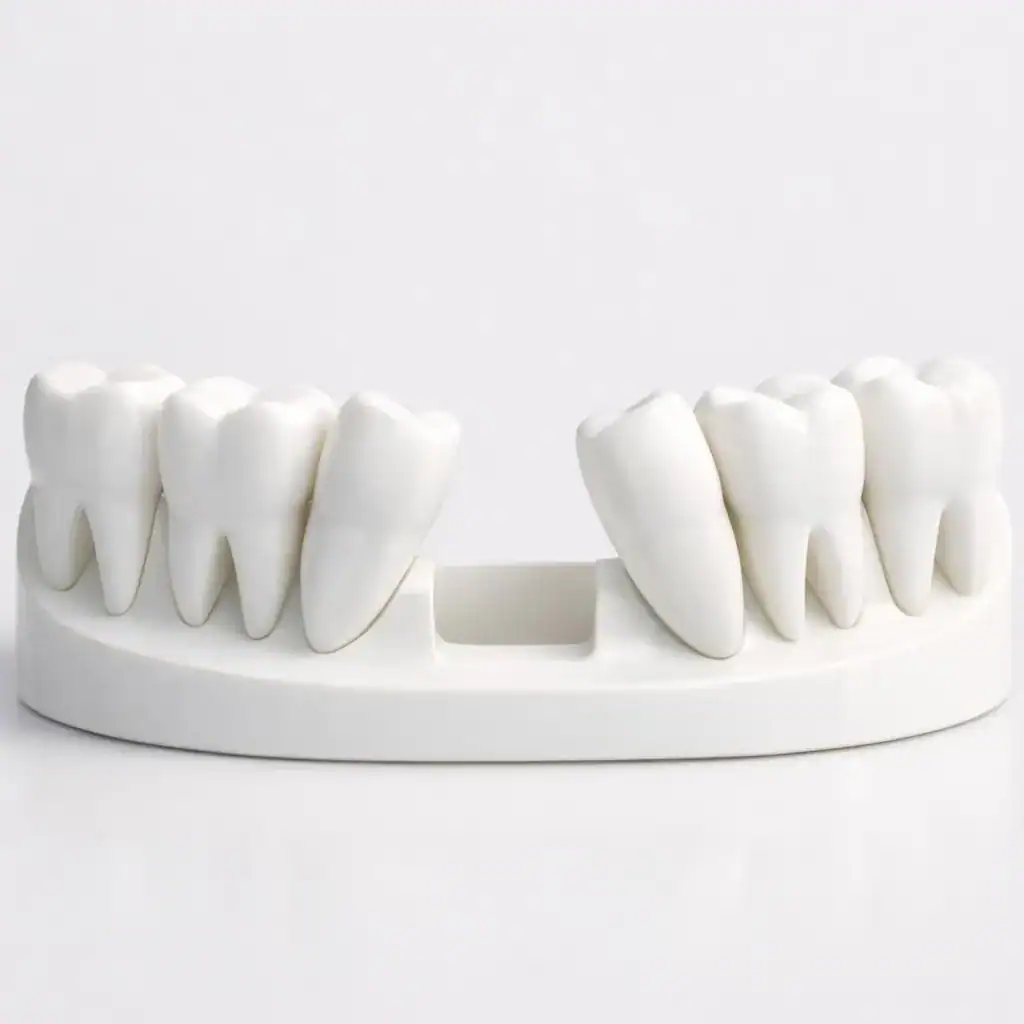
- Adjacent Teeth Shift: The teeth next to the gap start drifting toward the empty space, like books on a shelf when you remove one from the middle. This creates new gaps and spacing issues.
- Super-Eruption Occurs: The tooth above or below the missing one begins to extend into the empty space because it no longer has an opposing tooth to bite against.
- Bite Misalignment: This throws off your entire bite alignment, changing the way your upper and lower teeth come together when you chew.
- Widespread Impact: Your bite is an interconnected system. When one area falls out of balance, the effects ripple outward, potentially causing jaw pain, headaches, or difficulty chewing.
- Increased Wear & Damage: Teeth taking on extra chewing responsibility due to the gap face increased wear and stress, making them more susceptible to damage and decay.
What started as one missing tooth has now created a situation where multiple teeth are at risk, your jaw function is compromised, and your entire oral health trajectory has shifted in a negative direction. And this is all happening whether you're consciously aware of it or not.
Why Your Face Changes Shape When Teeth Go Missing
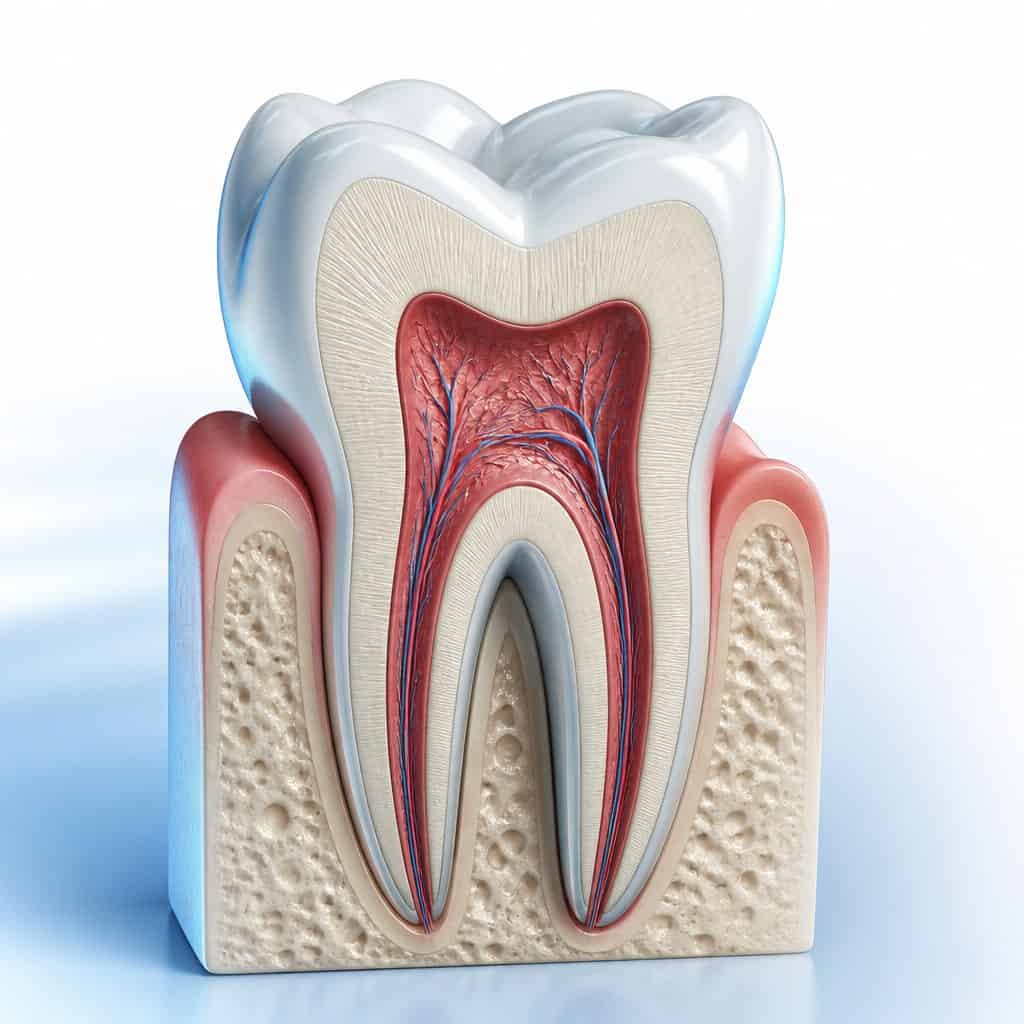
Beyond the immediate shifting of teeth, there's an even more profound process taking place that most people never consider until the visible effects become undeniable. Your jawbone isn't static; it's living tissue that constantly remodels itself in response to the stresses and stimulation it receives. When your teeth are intact, the pressure from chewing travels through the tooth roots into the jawbone, signaling your body to maintain that bone density and structure.
Remove a tooth, and you remove that essential stimulation. Your body interprets the lack of stimulation as a sign that bone tissue is no longer needed in that area. The bone begins to resorb, gradually dissolving away. This deterioration starts immediately after tooth loss and continues progressively, accelerating over time.
The bone loss creates visible changes in your facial structure:
- The lower third of your face can begin to collapse inward as the jawbone shrinks.
- Your lips may lose support and appear thinner.
- The distance between your nose and chin decreases, creating a more aged appearance.
These aren't merely cosmetic concerns, though the aesthetic impact is real and significant. The structural changes affect how your remaining teeth fit together, how dentures or bridges might fit in the future, and the overall health of your jaw.
Here's what makes this particularly challenging: once jawbone is lost, it doesn't naturally regenerate. The longer you wait to address tooth loss, the more bone disappears, and the more complex any future dental treatment becomes. What could be a straightforward tooth replacement procedure today might require bone grafting and multiple surgical stages if you wait years to address it.
The Real Cost of "Waiting Until Later"
When people postpone dealing with missing teeth, they often frame it as a financial decision. The cost of dental implants or other replacement options feels significant in the moment, so waiting seems like the economically sensible choice. This thinking, while understandable, fundamentally misunderstands the actual financial trajectory of dental problems.
Dental issues don't remain stable when ignored. They escalate, and each stage of escalation brings higher costs and more complex interventions. That single missing tooth you're putting off might seem like a contained problem, but as the surrounding teeth shift and become compromised, you're potentially looking at needing treatment for multiple teeth instead of one. The bite misalignment can lead to TMJ disorders requiring specialized treatment. The bone loss can necessitate grafting procedures before implants become possible.
Immediate Action vs. Delayed Action: A Cost Comparison
The financial calculation shifts dramatically when you factor in the cascading costs of delayed treatment. What looks expensive today is almost always the most economical option compared to what that same situation will require in the future. This isn't about pressure or urgency for its own sake. It's about understanding that in dentistry, as in many areas of health, early intervention prevents exponentially more serious problems.
Hidden Expenses Beyond the Dental Chair
The financial impact extends into areas you might not immediately connect to your missing tooth:
- Nutritional Deficiencies: Compromised dental function often leads to avoiding certain foods, potentially causing nutritional deficiencies or digestive issues.
- Medical Costs: Secondary health problems arising from poor chewing or diet rarely get attributed back to their oral health origins, but the connection is real.
- Professional & Social Impact: Self-consciousness about your smile can hinder job interviews, networking, and client interactions, subtly impacting career progression and earning potential.
- Limited Social Life: Avoiding social situations involving food can limit relationship-building opportunities and overall quality of life.
These aren't trivial concerns. Your smile is part of how you present yourself to the world, and when you're constantly aware of dental problems or compensating for missing teeth, it creates a subtle but persistent drag on your professional and personal life.
What You're Really Missing Beyond the Tooth
The functional and financial aspects of tooth loss are important, but they don't capture the full human experience of living with missing teeth. There's an emotional and psychological dimension that's just as real, even if it's less tangible.
Consider these impacts on your daily life:
- Loss of Unreserved Joy: The freedom to laugh heartily without covering your mouth or smiling with lips closed in photographs often disappears.
- Constant Vigilance: It's exhausting to maintain constant awareness of your appearance, calculating angles and avoiding certain expressions.
- Strategic Eating: Ordering at a restaurant becomes an exercise in strategy, mentally reviewing the menu for foods you can comfortably eat rather than what sounds most appealing.
- Social Anxiety: Declining dinner invitations or feeling anxious at business lunches, worried about managing your meal discreetly.
- Compromised Pleasure: Losing the simple pleasure of eating – biting into an apple, enjoying a steak, or eating corn on the cob without difficulty.
These adaptations become so habitual that you might not even consciously recognize how much mental energy they consume or how they're shaping your choices and limiting your experiences.
The Confidence Factor in Professional Settings
Your smile is often the first thing people notice about you, and in professional contexts, first impressions carry enormous weight. Whether fair or not, people make rapid judgments about competence, trustworthiness, and attention to detail based on appearance. Missing teeth can trigger unconscious biases that affect how colleagues, clients, or potential employers perceive you.
When you're aware of a dental issue, that self-consciousness often manifests in subtle ways: reduced eye contact, more reserved communication, hesitation to speak up in meetings. These behavioral shifts can be more damaging to your professional trajectory than the actual appearance of missing teeth, creating a cycle where self-consciousness undermines the confidence that's essential for career advancement.
Addressing missing teeth isn't vanity. It's recognizing that in a competitive professional landscape, removing obstacles to showing up as your most confident, capable self is a legitimate investment in your future.
How Modern Technology Changed the Tooth Replacement Equation
If your mental image of dental implant treatment is based on stories from a decade or two ago, you're working with outdated information. The technological advances in dental treatment, particularly with innovations like CEREC CAD/CAM technology, have fundamentally transformed what the tooth replacement process looks like.
Modern approaches using advanced digital technology have streamlined this considerably:
- Digital Scanning: Eliminates the discomfort and inaccuracy of traditional impressions.
- Computer-Aided Design (CAD): Creates precise custom restorations with unparalleled accuracy.
- Reduced Timeframe: Advanced systems can design and create custom solutions in a dramatically reduced timeframe, often in a single visit for certain restorations.
- Superior Materials: Modern implant materials integrate naturally with your jawbone, providing essential stimulation to preserve bone density and prevent facial structure changes.
- Natural Aesthetics & Function: The visible "tooth" portion uses materials that match your natural teeth in both appearance and function, making the result virtually indistinguishable.
The precision of CEREC technology represents a genuine breakthrough in both efficiency and quality. This isn't just about convenience; it's about accuracy, consistency, and achieving optimal results that integrate seamlessly with your existing teeth.
Learn About Advanced Solutions
Experience the Future of Dental Care
Modern dental technology makes tooth replacement faster, more comfortable, and more precise than ever before. Don't let old fears hold you back.
What This Means for Your Treatment Experience
The practical implications of these technological advances translate into a fundamentally different patient experience:
- Faster Treatment: Procedures that once required a dozen appointments over six months might now be accomplished in a fraction of that time.
- Predictable Outcomes: The precision of digital planning means fewer surprises, more predictable results, and reduced need for adjustments.
- Reduced Discomfort: Techniques have become more refined and minimally invasive, leading to decreased discomfort levels.
- Shorter Recovery: Overall recovery times have shortened, allowing you to return to normal life sooner.
This matters because it removes many of the practical barriers that kept people from addressing missing teeth promptly. Modern approaches have eliminated many of those friction points, making prompt treatment more accessible and less disruptive to daily life.
Understanding Your Options Without the Pressure
One of the reasons people delay addressing missing teeth is uncertainty about the process, what treatment actually involves, and whether they're making the right decision. This hesitation is entirely understandable. Dental treatment represents a significant investment of money, time, and emotional energy. You want to be certain you're making an informed choice.
The right approach to tooth replacement starts with a comprehensive evaluation of your specific situation. Every mouth is different, with unique anatomical considerations, health factors, and personal circumstances that influence what treatment approach makes sense. A thorough consultation provides clarity about what's actually happening in your mouth, what options exist for your situation, and what each path forward would involve.
This evaluation process serves you in multiple ways:
- Concrete Information: You gain specific details about your jawbone's current state, how the missing tooth has affected surrounding teeth, and the trajectory if you continue without treatment.
- Personalized Answers: Ask questions, voice concerns, and get specific answers based on your unique situation.
- Demystified Process: Understand the timeline, what each stage involves, what to expect for recovery, and how the final result will function.
The Value of Professional Partnership
Beyond the technical information, the consultation process helps you find a dental team you feel comfortable working with. Dental implant treatment isn't a single appointment; it's a process that unfolds over time, and having practitioners you trust makes an enormous difference in your experience. You want providers who listen to your concerns, explain things clearly, and approach your care as a partnership rather than just executing a procedure.
The evaluation is also your opportunity to understand the investment involved, not just financially but in terms of time and lifestyle adjustment during treatment. Getting clear, honest information about costs, insurance coverage, and available payment options removes the anxiety of financial uncertainty. You can make a decision based on real numbers and your actual situation rather than vague fears about affordability.
This isn't about pressure to commit immediately. It's about gathering the information you need to make a thoughtful, informed decision about your health. The consultation serves you whether you proceed with treatment right away, decide to wait a specific period while you plan for it, or determine that a different approach makes more sense for your circumstances.
Making the Decision That's Right for You
Understanding the reality of what happens when missing teeth go unaddressed doesn't mean you need to make a rushed decision. It means making your choice from a position of knowledge rather than avoidance. You now understand that tooth loss triggers a cascade of consequences, that these effects accelerate over time, that delayed treatment becomes more complex and expensive, and that modern technology has made tooth replacement more accessible than ever.
The question isn't really whether to address missing teeth. It's when, and under what circumstances. Choosing to be proactive about tooth replacement prevents the cascade of problems that waiting creates. It preserves your jawbone, protects surrounding teeth, maintains your facial structure, and keeps your options straightforward rather than increasingly complex.
Consider what's driving any hesitation you feel:
- Financial Concerns: Understand that dental practices offer various payment options, and the cost only increases with delay.
- Fear or Anxiety: Recognize that modern techniques are far less invasive than you might imagine, and a consultation can address your specific concerns.
- Time Constraints: Acknowledge that your health deserves to be a priority, especially when addressing it now prevents significantly larger problems later.
Your smile is more than cosmetic. It's functional, affecting your ability to eat comfortably and speak clearly. It's structural, providing essential support for your facial features and jawbone. It's social and professional, influencing how you show up in the world and how others perceive you. And it's personal, affecting your confidence and quality of life in ways both obvious and subtle.
The Path Forward Starts With Information
You don't need to navigate this decision alone or based on incomplete information. At Dr. Richard Malek and The Harmony Dental Group, the approach to dental implants starts with education and understanding. You'll receive a comprehensive evaluation of your specific situation, clear explanation of your options, and honest guidance about what treatment approach makes sense for you.
The team, led by Dr. Richard Malek, specializes in dental implants and utilizes CEREC CAD/CAM technology to provide precise, efficient treatment. But more importantly, they understand that tooth replacement is a significant decision, and they prioritize helping you feel informed, comfortable, and confident about your choice. There's no pressure, no rushed decisions—just clear information and experienced guidance.
Booking a consultation gives you the information you need without committing to treatment. You'll leave with a clear understanding of what's happening in your mouth, what your options are, what treatment would involve, and what investment it requires. Then you can make your decision based on facts rather than uncertainty or outdated assumptions about what dental implant treatment entails.
The missing tooth isn't going to improve on its own. The consequences aren't going to pause while you decide what to do. But you can stop the cascade of problems in its tracks by taking action now, while treatment remains straightforward and before the situation becomes more complex. Your future self will thank you for addressing this proactively rather than waiting until the options become more limited and more costly.
Call Us to Schedule Your Consultation
Ready to Restore Your Smile and Confidence?
Stop waiting for things to get worse. Take the first step towards a healthier, happier you.
Get clear answers, understand your options, and discover how modern tooth replacement can transform your life.
Frequently Asked Questions
- Delaying tooth replacement can lead to significant long-term consequences, including misalignment of surrounding teeth, jawbone deterioration, and increased risk of decay in adjacent teeth. As teeth shift to fill the gap, they can create new spacing issues, leading to a cascade of dental problems. Additionally, the longer you wait, the more complex and costly future treatments may become, potentially requiring bone grafts or orthodontic work to correct misalignments.
What are the long-term effects of delaying tooth replacement?
- Missing a tooth can impact your overall health in several ways. It can lead to difficulties in chewing, which may cause nutritional deficiencies if you avoid certain foods. Additionally, the stress on remaining teeth can lead to increased wear and potential decay. The psychological effects, such as reduced confidence and social anxiety, can also affect mental health and well-being, creating a cycle of avoidance and further health issues.
How does missing a tooth affect my overall health?
- There are several options for replacing missing teeth, including dental implants, bridges, and dentures. Dental implants are often considered the most effective long-term solution, as they integrate with the jawbone and function like natural teeth. Bridges can fill gaps by anchoring to adjacent teeth, while dentures are removable appliances that can replace multiple missing teeth. The best option depends on individual circumstances, including the number of missing teeth and overall oral health.
What are the different options for replacing missing teeth?
- Modern technology, such as CEREC CAD/CAM systems, has revolutionized the tooth replacement process by allowing for digital scanning and precise custom restorations. This technology reduces the number of appointments needed, minimizes discomfort, and shortens recovery times. Additionally, advancements in implant materials ensure better integration with the jawbone, preserving bone density and enhancing the overall success of the treatment.
How can modern technology improve the tooth replacement process?
- During a dental consultation for tooth replacement, you can expect a comprehensive evaluation of your oral health, including an assessment of the condition of your jawbone and surrounding teeth. The dentist will discuss your treatment options, explain the procedures involved, and address any concerns you may have. This is also an opportunity to understand the financial aspects, including costs and payment options, ensuring you feel informed and comfortable with your decision.
What should I expect during a dental consultation for tooth replacement?
- Yes, missing teeth can significantly affect both speech and eating habits. Gaps in your smile can lead to difficulties in pronouncing certain sounds, which may cause embarrassment or self-consciousness. Additionally, the inability to chew properly can lead to dietary restrictions, as individuals may avoid hard or chewy foods. This can result in nutritional deficiencies and impact overall health, making it essential to address missing teeth promptly.
Can missing teeth affect my speech and eating habits?
- After tooth replacement, maintaining oral health is crucial for the longevity of your new teeth. Regular dental check-ups, proper brushing and flossing, and a balanced diet are essential. It's also important to avoid habits that can damage your teeth, such as grinding or chewing on hard objects. Following your dentist's aftercare instructions and addressing any issues promptly will help ensure the success of your tooth replacement and overall oral health.
How can I maintain my oral health after tooth replacement?
Conclusion
Addressing missing teeth promptly is crucial for maintaining your oral health, preventing further complications, and preserving your facial structure. Understanding the cascading effects of tooth loss empowers you to make informed decisions that enhance both your function and confidence. Don't let hesitation hold you back; take the first step towards restoring your smile by scheduling a consultation today. Your journey to optimal oral health begins with proactive action.
About The Harmony Dental Group
At The Harmony Dental Group in Norwalk, led by Dr. Richard Malek, we are dedicated to providing exceptional dental care with a focus on advanced tooth replacement solutions. Specializing in dental implants and utilizing cutting-edge CEREC CAD/CAM technology, our team ensures precise, efficient, and comfortable treatment experiences. We believe in empowering our patients through comprehensive education and personalized care, helping you make informed decisions about your oral health in a supportive and pressure-free environment. Your journey to a healthy, confident smile is our priority.