If you snore loudly, wake up tired no matter how long you slept, or your partner has noticed you stop breathing in the night, the problem may be more than restless sleep. It could be obstructive sleep apnea, and it is worth taking seriously. The good news for people in Norwalk: you do not always need a CPAP machine to treat it. For many patients, a small custom oral appliance made by a dentist is a comfortable, quiet, travel-friendly alternative. At The Harmony Dental Group, Dr. Richard Malek helps patients sleep and breathe better with dental sleep solutions built around real comfort.
What is obstructive sleep apnea?
Obstructive sleep apnea (OSA) happens when the soft tissues at the back of your throat relax during sleep and block your airway, over and over, all night. Each pause pulls you out of deep sleep, even if you never fully wake up. Left untreated, it is linked to high blood pressure, heart problems, daytime exhaustion, and trouble concentrating. Loud, chronic snoring is one of the most common warning signs.
How a dentist treats sleep apnea and snoring
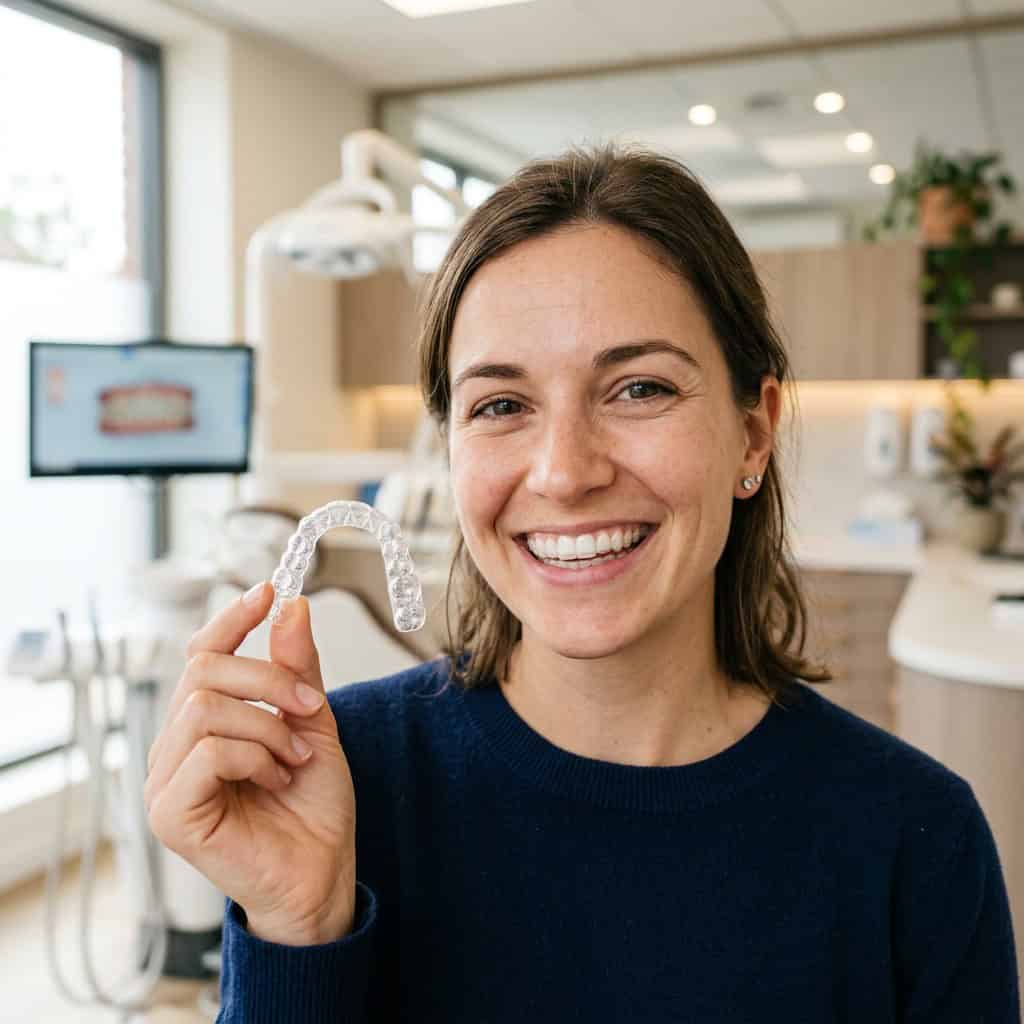
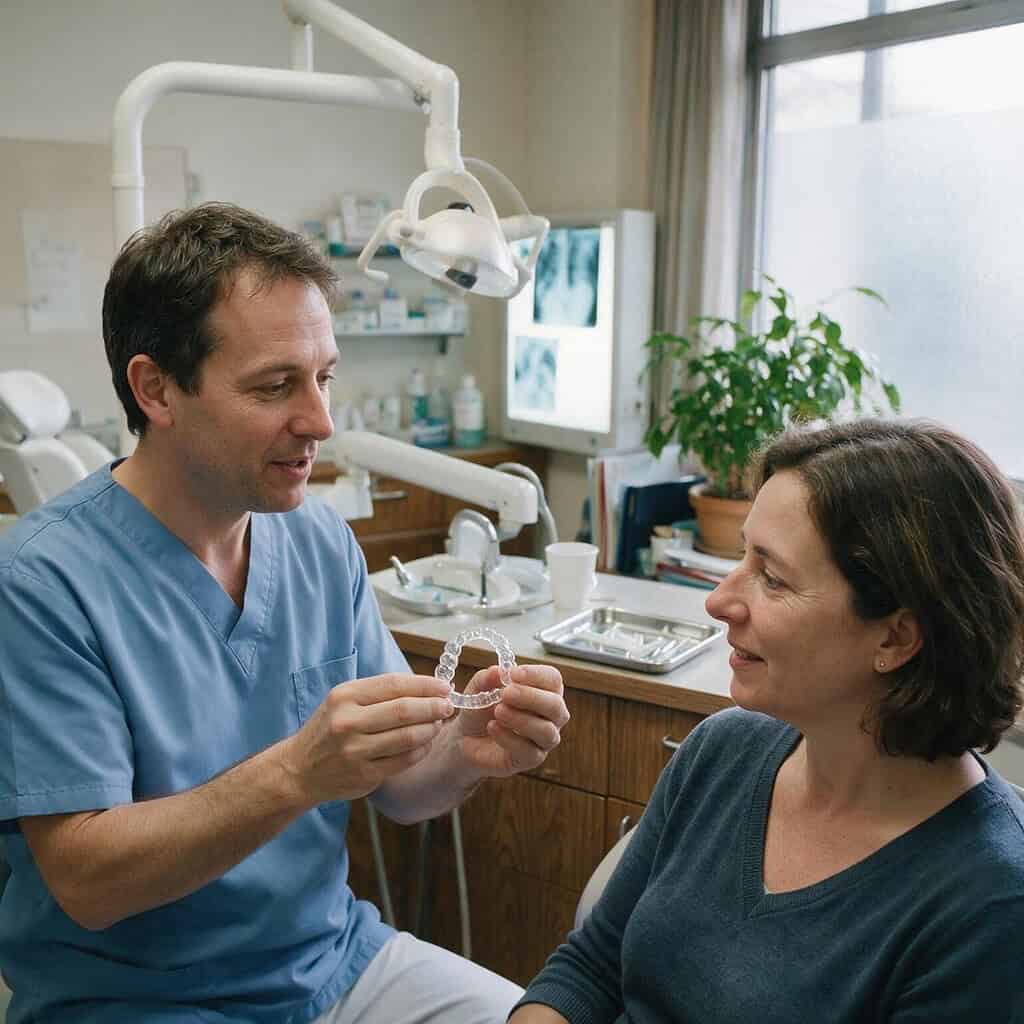
Dentists play a real role in sleep medicine through a custom-fitted oral appliance. It looks a lot like a retainer or mouthguard and works by gently holding your lower jaw slightly forward, which keeps the airway open so you can breathe freely and quietly through the night. Learn more about our approach to sleep apnea treatment. Because the device is made just for your mouth, it is far more comfortable than a bulky one-size mouthpiece, and much easier to travel with than a machine.
Signs you might have sleep apnea
It is worth getting checked if you notice: loud, habitual snoring; gasping or choking sounds at night; a partner who sees you stop breathing; morning headaches; a dry mouth or sore throat on waking; or feeling tired and foggy during the day no matter how long you were in bed. Many people live with these for years and assume it is normal. It does not have to be.
Oral appliance vs. CPAP
CPAP is highly effective, but a lot of people simply cannot tolerate the mask, the noise, or the hose. For mild to moderate sleep apnea, or for anyone who has given up on CPAP, an oral appliance is a proven, well-established option. It is silent, needs no electricity, fits in a pocket for travel, and most people adjust to it quickly. We coordinate with your physician and any sleep-study results so your treatment is safe and appropriate for your diagnosis.
Grinding your teeth, too?
Snoring and nighttime teeth grinding often go hand in hand, and both can wreck your sleep and your smile. If you wake with a sore jaw or worn teeth, mention it, we can factor that into the appliance we design for you.
Why Norwalk patients choose The Harmony Dental Group
Dr. Richard Malek and our team have earned a 4.9-star rating from hundreds of neighbors across Norwalk, South Norwalk, and Fairfield County. We take the time to fit your appliance precisely, adjust it until it feels right, and make the whole process easy, including comfort options for anxious patients. Better sleep changes everything, and it can start with one conversation.
Tired of being tired? Call 203-354-3193 to talk with your dentist in Norwalk, CT about a comfortable alternative to CPAP.
Related reading
- Sleep Apnea Treatment at The Harmony Dental Group
- What Is Sleep Apnea and How Is It Treated?
- Teeth Grinding & Night Guards
Frequently asked questions about sleep apnea treatment in Norwalk, CT
Do I need a sleep study first?
For a sleep apnea diagnosis, yes, treatment should be based on a proper evaluation. We work alongside your physician and your sleep-study results to make sure an oral appliance is the right fit. If you only snore without apnea, an appliance may still help, and we can talk through your options.
Is an oral appliance as effective as CPAP?
For mild to moderate obstructive sleep apnea, oral appliances are a well-established, effective treatment, and because people actually wear them, real-world results are often excellent. For severe apnea, CPAP is usually first-line, but an appliance can be a valuable backup when CPAP is not tolerated.
Will insurance cover it?
Oral appliance therapy for diagnosed sleep apnea is often covered under medical insurance rather than dental. Call 203-354-3193 and we will help you understand your coverage and options.
Is the appliance comfortable to wear?
Because it is custom-made for your mouth and adjusted to fit, most patients find it comfortable and get used to it within a week or two. It is far less intrusive than a mask and hose.